
FAITH. GROWTH. PURPOSE. TRANSFORMATION.
Faith, Mindset & Personal Growth Resources
Practical, faith-centered insights on mindset renewal, emotional wellness, boundaries, relationships, forgiveness, healing, purpose, and personal growth — rooted in biblical truth and evidence-informed coaching.
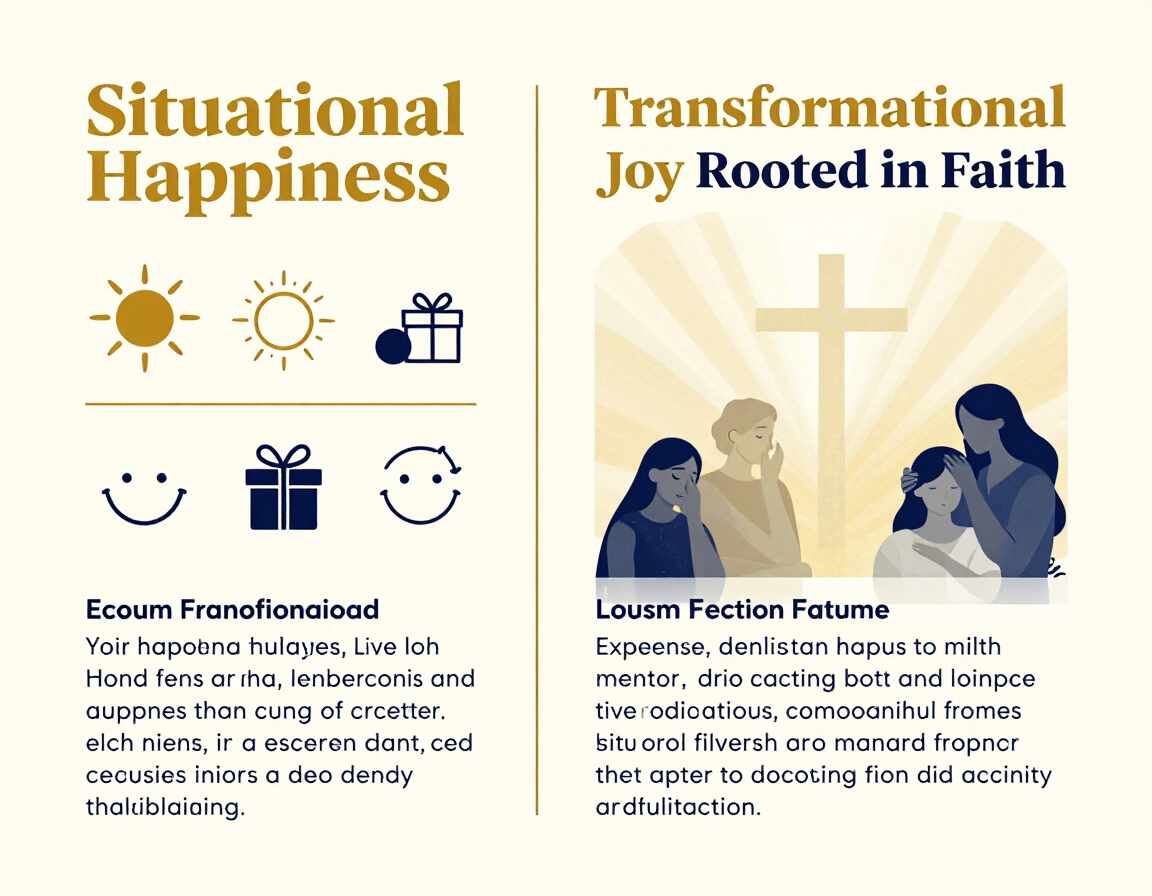
FEATURED RESOURCE
Happiness Is Situational. Joy Is Transformational.
We help you cultivate lasting joy through faith, mindset renewal, and intentional living.
TRANSFORM YOUR MIND. RENEW YOUR SPIRIT. LIVE YOUR PURPOSE.
BLOG POST
Faith vs Therapy: Why You Truly Need Both
Estimated reading time: 5 min · Faith & Mindset

For a long time, people have treated faith and mental health support as if they are opposites. As if praying means you should ignore your emotions or as if going to therapy or working with a coach means your faith is weak. What if they were never supposed to compete in the first place? What if they were designed to work together?
One reason so many people remain stuck is because they lean completely into one side while neglecting the other. Some people pray faithfully but never address their unhealthy patterns. Others spend time analyzing behaviors and emotions but never renew what they believe internally. Both approaches can leave empty spaces.
Faith provides spiritual direction. Coaching and therapy offer awareness, practical tools, and intentional action. Together, they create room for real transformation.
"Let God transform you into a new person by changing the way you think." — Romans 12:2 (NLT)
That scripture matters because transformation starts internally. God is not only concerned with outward behavior. He also cares about the condition of the heart, mind, and inner life.
"Plans go wrong for lack of advice; many advisers bring success." — Proverbs 15:22 (NLT)
Faith has never been against wisdom, healing, accountability, or support.
In coaching and psychology, renewing the mind can look like:
• Challenging limiting beliefs
• Building emotional awareness
• Learning healthier coping skills
• Breaking toxic cycles
• Improving communication
• Creating healthier behaviors
Different words, same work.
This is why faith and coaching can exist together beautifully. For example, someone dealing with anxiety may pray consistently while still struggling with unresolved fear, overthinking, or nervous system responses connected to past trauma. Prayer creates spiritual grounding, while coaching and therapeutic tools help uncover the patterns fueling the anxiety in everyday life.
Both are important. Ignoring emotional wounds while calling it 'faith' often creates suppression instead of healing. At the same time, trying to heal emotionally without addressing spiritual emptiness can leave people informed, yet still disconnected internally. Real healing requires honesty in every area.
At Mind Higher Collective, this is why we combine faith based reflection, scripture meditation, mindset work, and structured coaching strategies. Not because faith is lacking and not because psychology replaces God, but because God can work through wisdom, structure, accountability, and intentional growth.
Healing isn't weakness, asking for support isn't weakness, and doing the work definitely isn't weakness. It is wisdom.
References
Holy Bible, New Living Translation. (2015). Tyndale House Publishers. Proverbs 15:22; Romans 12:2.
Beck, J. S. (2011). Cognitive behavior therapy: Basics and beyond. Guilford Press.
Cloud, H., & Townsend, J. (1992). Boundaries: When to say yes, how to say no to take control of your life. Zondervan.
Share this post:
You Might Also Enjoy
Mind Higher Collective provides coaching services and is not a substitute for licensed mental health therapy, counseling, crisis intervention, or medical treatment.
Ready to Move From Insight to Action?
Schedule a complimentary 30-minute consultation to discuss your goals and whether Mind Higher Collective is the right fit for your next season of growth.
BLOG POST
Signs You're Dealing With a Soul Tie (In Real Life Terms)
Estimated reading time: 6 min · Relationships & Boundaries

Most of the time when someone hears the term 'soul tie', the thought usually consists of an unhealthy tie with a romantic partner. However, a soul tie can also form with a parent, a best friend, a mentor, or anyone who has gained an unhealthy emotional influence or control in your life.
From a faith perspective, ungodly soul ties are unhealthy emotional or spiritual attachments that pull a person into unhealthy patterns, emotional bondage, or misplaced dependence (Lionheart Church, n.d.). Spiritually, these relationships often create confusion, emotional instability, fear, guilt, people pleasing, or difficulty separating your identity from another person.
In coaching and psychological language, these same patterns are often described as:
• Codependency
• Toxic attachment
• Emotional enmeshment
• Trauma bonding
• Unhealthy relational dependency
Different words yet the same emotional reality.
"This explains why a man leaves his father and mother and is joined to his wife, and the two are united into one." — Genesis 2:24 (NLT)
When it comes to harmful soul ties or attachments the issue isn't connection itself, the issue is when connection becomes an unhealthy attachment, loss of identity, manipulation, or emotional control.
This is where soul ties often become destructive in real life. For example, you may be dealing with an unhealthy soul tie if:
• You feel emotionally controlled by someone's approval or rejection
• You constantly neglect your own needs to keep someone else happy
• You feel unable to move forward after a toxic relationship ends
• You confuse guilt with love
• You struggle to establish boundaries
• You feel responsible for another person's emotions or choices
• You remain loyal to relationships that repeatedly harm you
In psychology, this can sometimes develop through trauma bonding, where cycles of emotional pain and temporary affection create unhealthy attachment patterns (Carnes, 2019).
In real life, this often looks like:
• Staying connected to someone who drains you emotionally because being alone feels worse.
• Allowing a parent or friend to dictate your decisions because you fear disappointing them.
• Returning repeatedly to relationships that hurt you because the emotional attachment feels stronger than logic.
Many people mistake intensity for love, but unhealthy attachment is not love. Love does not require losing yourself.
"So Christ has truly set us free. Now make sure that you stay free, and don't get tied up again in slavery to the law." — Galatians 5:1 (NLT)
While this scripture speaks spiritually, the principle applies relationally as well. Anything that continually pulls you into emotional bondage, confusion, fear, or loss of identity deserves honest examination.
At Mind Higher Collective, this is why we help clients identify unhealthy relational patterns while also rebuilding boundaries, identity, emotional awareness, and self worth through both faith based reflection and coaching strategies.
Healing is not just about leaving unhealthy relationships. It's also about understanding why unhealthy attachment formed in the first place. Once you understand the root, you stop confusing attachment with connection.
References
Holy Bible, New Living Translation. (2015). Tyndale House Publishers. Galatians 5:1; Genesis 2:24.
Carnes, P. (2019). The betrayal bond: Breaking free of exploitive relationships. Health Communications, Inc.
Lionheart Church. (n.d.). Deliverance teachings. Retrieved from https://www.lionheart.org
Share this post:
You Might Also Enjoy
Mind Higher Collective provides coaching services and is not a substitute for licensed mental health therapy, counseling, crisis intervention, or medical treatment.
Ready to Break Free from Unhealthy Patterns?
Schedule a complimentary 30-minute consultation to discuss your goals and whether Mind Higher Collective is the right fit for your next season of growth.
BLOG POST
Why Are You Sitting in Offense? What Unforgiveness Is Doing to Your Mind, Body, and Spirit
Estimated reading time: 7 min · Forgiveness & Healing

We are living in a time where people are offended by almost everything. All it seems to take is one comment, one disagreement, one unmet expectation, one disappointment. While offense may feel justified in the moment, very few people stop to consider what it is actually doing.
Over time, offense becomes a stronghold. From a faith perspective, offense is one of the enemy's most effective tools because it quietly opens the door to resentment, bitterness, division, and unforgiveness. What begins as hurt can eventually turn into agreement with unforgiveness, if it's not dealt with properly. The dangerous part is that many people don't even realize it's happening.
Pastor Jerry Flowers has spoken powerfully about offense becoming a trap that keeps people emotionally bound long after the original hurt occurred (Flowers, n.d.). The hurt may have happened years ago, but the offense keeps replaying the pain internally over and over again.
Spiritually, offense builds walls around the heart and once those walls go up, it becomes difficult for truth, healing, correction, love, or even healthy relationships to reach the person sitting behind them. That is why offense is so dangerous.
"Sensible people control their temper; they earn respect by overlooking wrongs." — Proverbs 19:11 (NLT)
Notice the scripture does not say people will never hurt you. It teaches wisdom in how we respond to hurt. Unresolved offense almost always gives birth to unforgiveness and unforgiveness becomes heavy.
Many people believe forgiveness means what happened was acceptable or that the person who caused harm is getting away with something, but forgiveness is not approval. Forgiveness is release. It's choosing not to continue carrying something that was never meant to live in your spirit, mind, or body.
"Dear friends, never take revenge. Leave that to the righteous anger of God." — Romans 12:19 (NLT)
Vengeance belongs to God because we were never designed to carry that weight.
"Get rid of all bitterness, rage, anger, harsh words, and slander, as well as all types of evil behavior. Instead, be kind to each other, tenderhearted, forgiving one another, just as God through Christ has forgiven you." — Ephesians 4:31–32 (NLT)
That last part matters deeply as we are forgiven as we forgive.
From a spiritual perspective, many faith leaders teach that when we remain in bitterness, resentment, and unforgiveness, we unknowingly come into agreement with those emotions and the spiritual bondage connected to them. In other words, offense can become a covenant we continue feeding emotionally. What you repeatedly agree with internally eventually shapes your life externally.
Now let's talk about what this looks like from a coaching and psychological perspective.
Chronic resentment and unforgiveness place the body under ongoing stress. Research in psychology and neuroscience has shown that unresolved emotional stress can contribute to:
• Anxiety
• Chronic tension
• Sleep disturbances
• Increased cortisol levels
• Emotional dysregulation
• Depression
• Digestive issues
• Elevated blood pressure
The body keeps score.
When someone constantly replays hurt, betrayal, anger, or resentment internally, the nervous system often remains in a heightened state of stress and emotional activation.
In coaching language, offense often becomes emotional attachment to pain. The hurt becomes part of identity. The person begins viewing relationships, situations, and even themselves through the lens of unresolved wounds.
That is why forgiveness is not just spiritual, it's emotional freedom.
Forgiveness does not always restore relationships, it doesn't always remove consequences, it doesn't erase accountability, but forgiveness does release you.
At Mind Higher Collective, this is why we help clients identify where offense, resentment, bitterness, and unresolved hurt may be silently shaping their thoughts, behaviors, relationships, and emotional health.
Healing begins when you stop rehearsing the wound and start releasing it and that does not happen by pretending you were never hurt. It happens by surrendering what was never yours to carry alone.
References
Flowers, J. (n.d.). Sermon teachings on offense and unforgiveness.
Holy Bible, New Living Translation. (2015). Tyndale House Publishers. Ephesians 4:31 to 32; Proverbs 19:11; Romans 12:19.
Luskin, F. (2002). Forgive for good: A proven prescription for health and happiness. HarperCollins.
Van der Kolk, B. (2014). The body keeps the score: Brain, mind, and body in the healing of trauma. Viking.
Share this post:
You Might Also Enjoy
Mind Higher Collective provides coaching services and is not a substitute for licensed mental health therapy, counseling, crisis intervention, or medical treatment.
Ready to Release What's Been Weighing You Down?
Schedule a complimentary 30-minute consultation to discuss your goals and whether Mind Higher Collective is the right fit for your next season of growth.
YOUR NEXT STEP STARTS HERE
Ready To Take The Next Step?
If you are tired of repeating the same cycles, feeling stuck, or wondering why your life is not moving in the direction you hoped, perhaps it is time for a different approach. Transformation does not happen by accident. It happens when faith, intentional action, and the right support come together.
At Mind Higher Collective, we help men and women navigate life's challenges with greater clarity, confidence, and purpose. The first step is simply starting the conversation. Schedule a complimentary consultation to learn more about the coaching process, discuss your goals, and determine whether Mind Higher Collective is the right fit for your next season of growth.
Mind Higher Collective provides coaching services and is not a substitute for licensed mental health therapy, counseling, crisis intervention, or medical treatment.